

WNC -- July 2, 2026:
As artificial intelligence fuels an unprecedented boom in massive data centers across the United States, a growing number of communities are pushing back. Concerns over water supplies, electricity demand, environmental impacts, and quality of life have sparked protests, lawsuits, moratoriums, and local bans from coast to coast. Now, that debate has reached Western North Carolina.
For many Western North Carolinians, the Party for Socialism and Liberation (PSL) was an unfamiliar name until members of the organization recently began calling for a statewide ban on new data center construction.
The Asheville-based protest is part of a much larger national movement. As technology companies race to build the infrastructure needed to support artificial intelligence, cloud computing, and other digital services, residents in communities across the country are increasingly questioning what those facilities could mean for their neighborhoods.
PSL says North Carolina has an opportunity to learn from the experiences of communities already living alongside large-scale data centers rather than waiting until similar challenges develop here. The group's petition calls on state lawmakers to prohibit new data center construction, repeal state tax incentives for the industry, and ensure that residential utility customers are not left paying for infrastructure needed to serve massive industrial users.
Founded in 2004, the Party for Socialism and Liberation is a national political organization with chapters throughout the United States. While the organization has long advocated on issues including labor rights, affordable housing, healthcare, environmental protection, and anti-war policies, opposition to AI data centers has become one of its newest and most visible campaigns in North Carolina.
So why has the issue become such a priority?
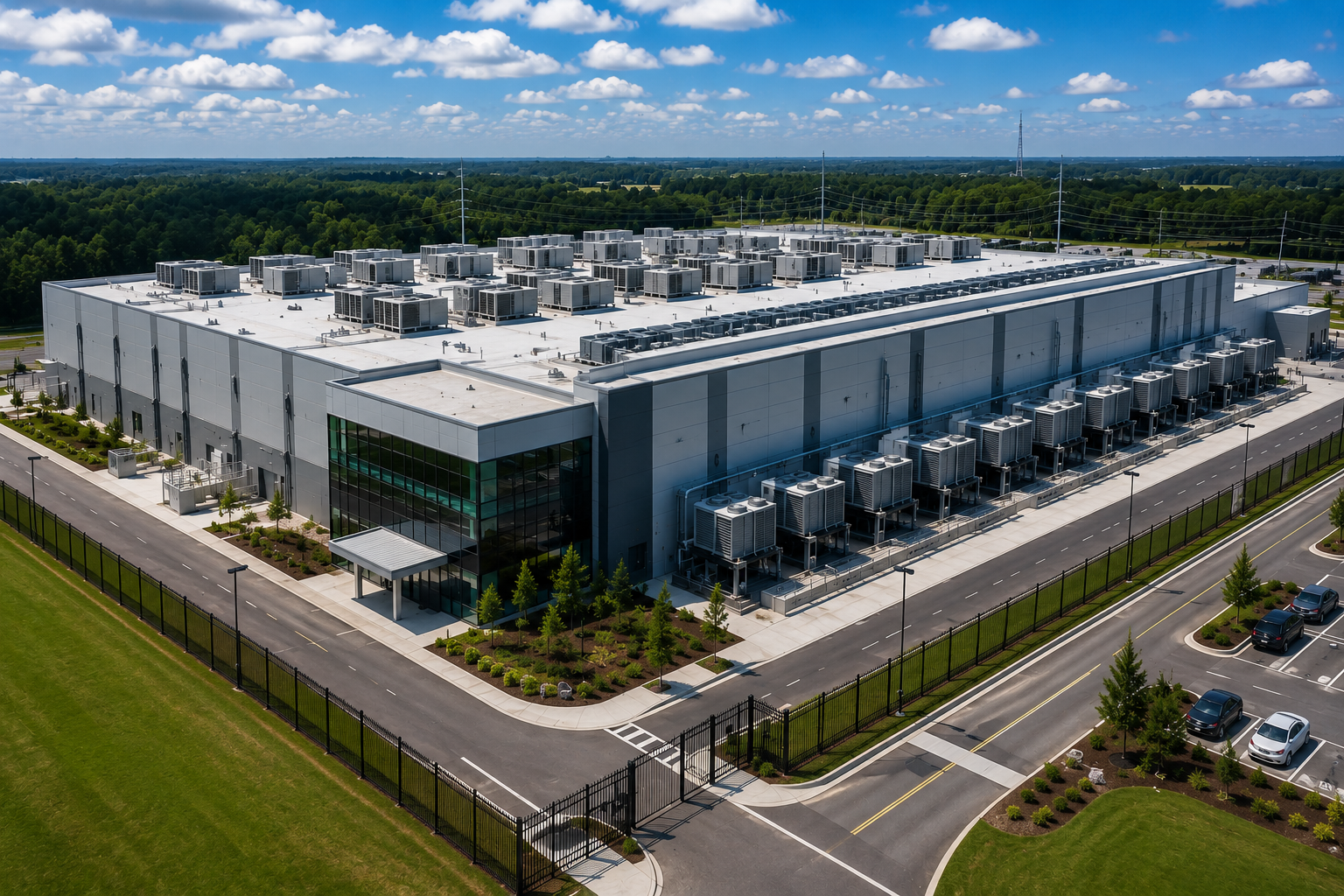
Across the country, communities are raising concerns over the rapid expansion of hyperscale data centers—massive facilities that house thousands of computer servers and require enormous amounts of electricity and, in many cases, millions of gallons of water for cooling.
Those concerns are no longer theoretical. Across the country, communities have responded with lawsuits, citizen petitions, moratoriums, zoning battles, and, in some cases, outright bans as local officials wrestle with the rapid expansion of AI infrastructure.
In Georgia, residents have challenged data center projects over heavy water consumption during drought conditions and concerns about local drinking water resources. In Virginia, home to the world's largest concentration of data centers, rapid industry growth has intensified debates over electric grid capacity, infrastructure expansion, and who should bear those costs. Similar disputes have emerged in Arizona, California, Tennessee, and other states as local governments struggle to balance economic development with demands on natural resources and public infrastructure.
The concerns being raised by residents, environmental organizations, and local officials are remarkably consistent:
Whether local water supplies can sustain facilities that may require millions of gallons of water for cooling.
Whether electric utilities will need costly new substations, transmission lines, and additional power generation.
Whether nearby neighborhoods will experience increased noise from cooling equipment and backup generators, increased traffic, or changes in land use.
Whether taxpayers should continue providing incentives for facilities that employ relatively few permanent workers once construction is complete.
Those same questions are now being asked in Western North Carolina.
Over the past several months, communities across the mountains have begun taking action. Asheville approved a one-year moratorium on new data center development while city leaders develop zoning regulations specific to the industry. Other Western North Carolina communities, including Boone, Canton, Woodfin, Clyde, Brevard, as well as Watauga, Madison, Clay, and Swain counties, have adopted or considered moratoriums or temporary restrictions while officials study the potential impacts of large-scale data centers. Local leaders have cited concerns about water resources, electric infrastructure, neighborhood compatibility, and long-term planning—not opposition to technology itself.
For PSL, those local actions reinforce the organization's argument that North Carolina should move even further by adopting a statewide ban. Whether state lawmakers ultimately support that proposal remains uncertain, but one thing is becoming increasingly clear: the conversation surrounding AI data centers has expanded well beyond Silicon Valley. It is now taking place in city halls, county commission meetings, and neighborhoods across the country—including here in Western North Carolina.
Supporters of data centers argue the facilities are essential to powering artificial intelligence, cloud computing, medical research, financial systems, and much of today's digital economy. They also point to billions of dollars in private investment, construction jobs, and additional local tax revenue. Opponents, however, believe communities deserve stronger protections and more local control before projects move forward.
As AI continues reshaping industries around the world, the debate over where—and how—the infrastructure behind that technology should be built is likely just beginning. In Western North Carolina, that conversation has already arrived.