

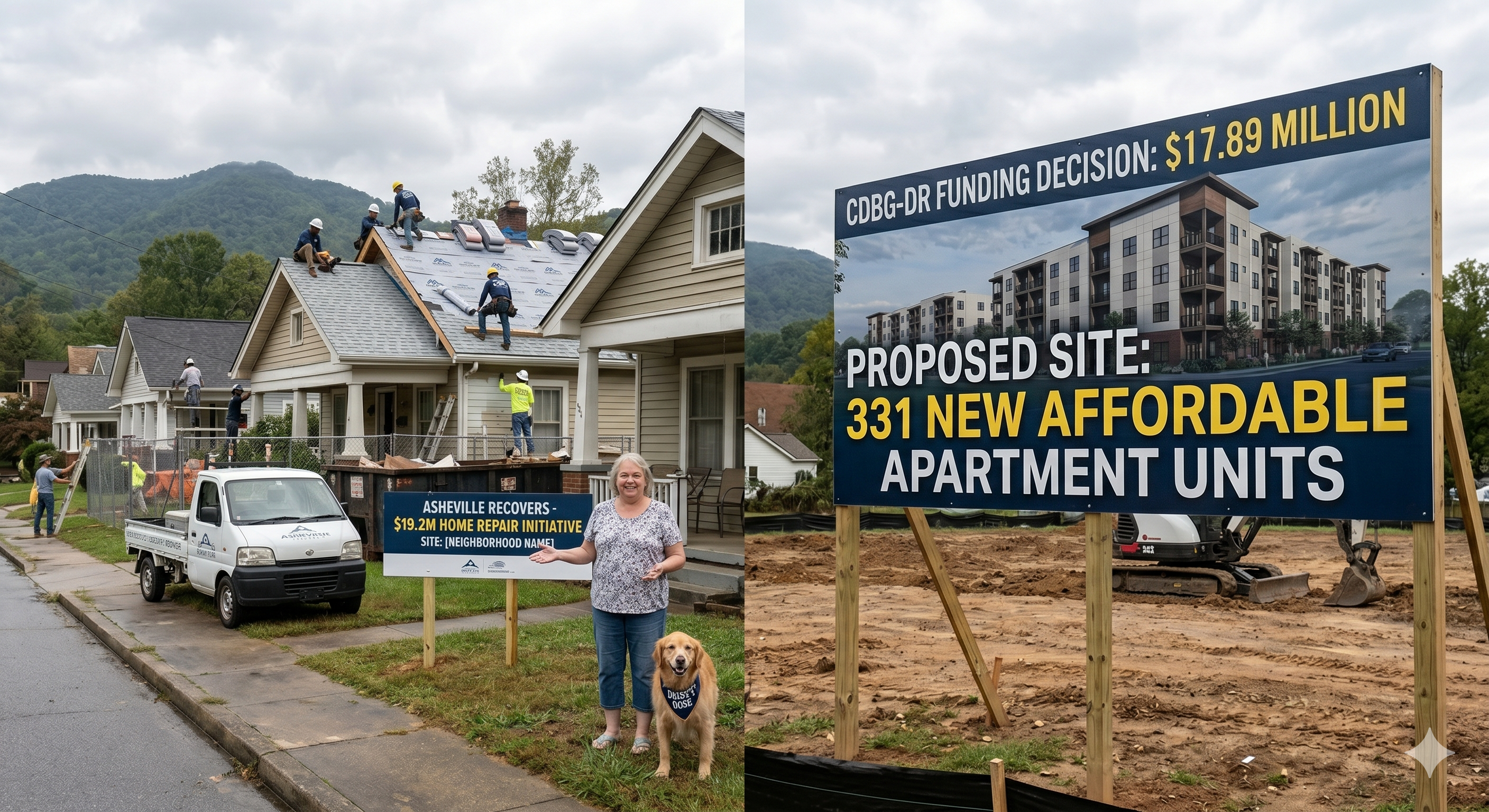
Asheville -- May 6, 2026: Following the recent conclusion of a long-term federal budget stalemate, Hurricane Helene recovery efforts in Asheville have reached a fever pitch. This Tuesday, May 12, Asheville City Council will face a defining vote: whether to commit over $17.89 million to new affordable apartment complexes or pivot those funds to assist 132 local homeowners still waiting for help.
The debate follows a Tuesday meeting of the Housing and Community Development Committee, where city staff unveiled a dramatic new proposal to address a massive funding gap in the city’s home repair program.
The $19.2 Million Pivot
When the city’s initial $225 million federal HUD grant (CDBG-DR) was first planned, only $3 million was set aside for home repairs—enough to fix roughly eight houses. City leaders originally believed state programs would cover the construction costs, but it has since been clarified that Asheville must foot the bill for "hard costs" like labor and materials within city limits.
To address this, city staff is now proposing an amendment to shift $19.2 million into the home repair fund. According to the plan presented by Program Manager Elma King, the money would be reallocated from two main sources:
$10 million from infrastructure projects.
$9.2 million from multifamily housing (apartment) subsidies.
This shift would bring the total home repair budget to $22.2 million, enough to finally restore an estimated 55 to 65 of the most damaged homes on the city’s waitlist.
The Committee's Decision
Despite the staff’s recommendation to prioritize repairs, the Housing and Community Development Committee voted 2-1 on Tuesday to recommend that $17.89 million still be directed toward three specific affordable apartment projects. Proponents of this plan argue that the 331 new units these projects would create are vital to solving Asheville’s long-term housing crisis.
Councilmember Sage Turner cast the lone dissenting vote, advocating for a "residents first" approach as the federal funds finally move out of administrative limbo.
“I am putting fixing people’s homes at the top, fixing infrastructure at the top, and subsidizing affordable apartments below both of those,” Turner said. “If I have to prioritize them, I am putting fixing people’s homes at the top.”
Why Now?
The sudden urgency is a direct result of the federal government "unfreezing" following the partial shutdown. With the administrative backlog cleared, the city is in a race to finalize its "Action Plan" amendments and begin the drawdown of funds. If the city does not lock in these priorities now, the 132 homeowners on the waitlist—many of whom are low-income or elderly—could face even longer delays.
Looking Ahead
The full City Council will make the final determination this Tuesday, May 12. For the families who have spent the last 18 months living with storm damage, the vote represents the difference between a rebuilt home and a continued wait.