

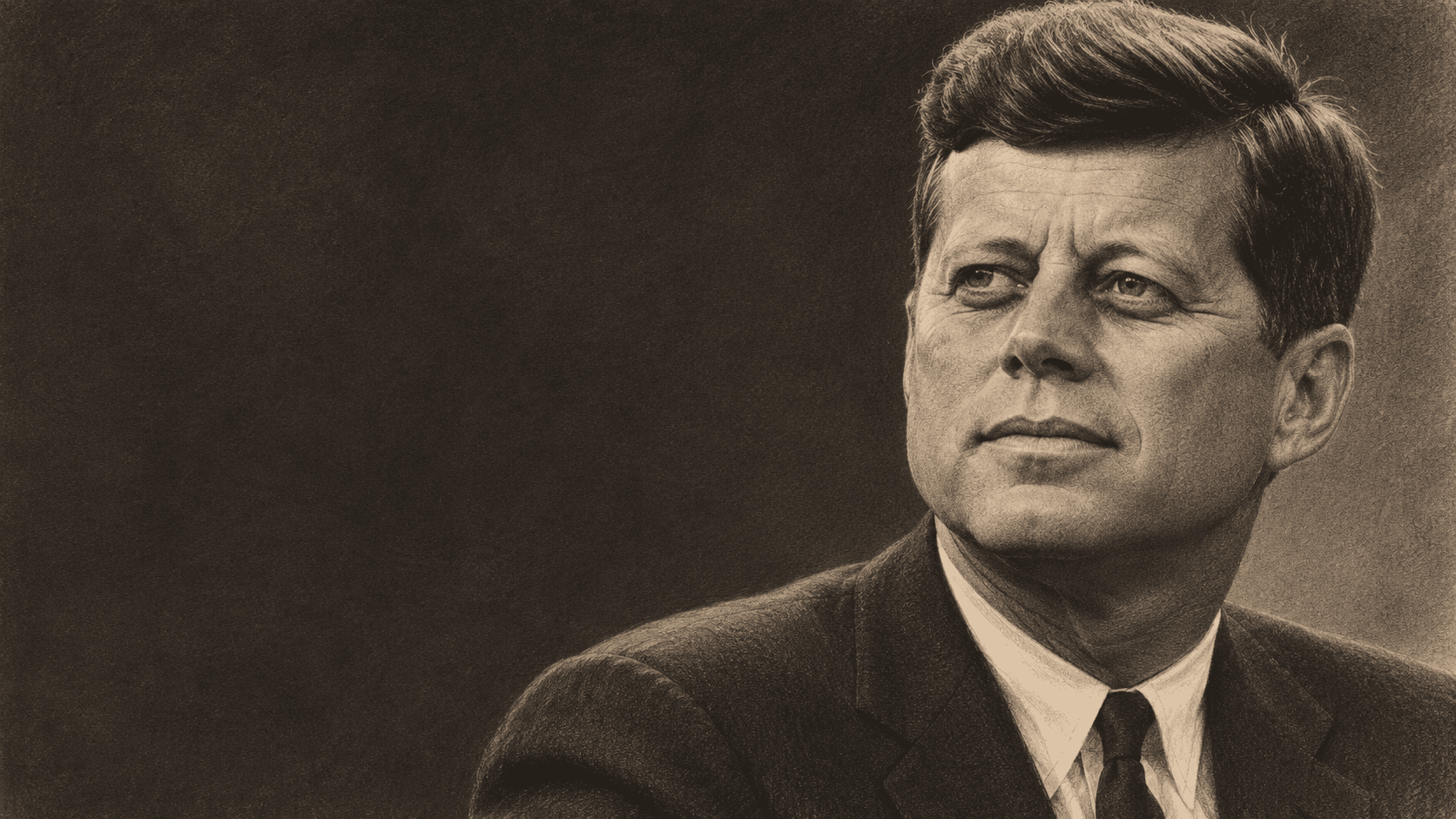
Waynesville -- November 22, 2026: Sixty-three years ago today, on Friday, November 22, 1963, President John F. Kennedy was assassinated while riding in an open-top limousine through Dealey Plaza in downtown Dallas, Texas—a moment that brought the nation to a sudden standstill and reshaped American history.
At roughly 12:30 p.m., as the presidential motorcade turned onto Elm Street past the Texas School Book Depository and waved to cheering crowds, gunshots rang out. Two bullets struck the 46-year-old president—one in the back of the neck and a fatal shot to the head—while also severely wounding Texas Governor John Connally, who was seated directly in front of him. The limousine raced to nearby Parkland Memorial Hospital, where doctors fought in vain to save the president before he was pronounced dead at 1:00 p.m. Within hours, Dallas police arrested former Marine Lee Harvey Oswald for the shooting.
Across the United States, everyday life ground to an immediate halt. Regular television and radio programming was suspended as millions of stunned Americans gathered around screens and broadcasts in living rooms, classrooms, and storefronts, struggling to process the loss of a young president who had come to symbolize a new era of optimism. Schools dismissed students early, businesses closed their doors, and churches opened for impromptu prayer services as grief and uncertainty swept from coast to coast.
That afternoon, in the cramped cabin of Air Force One at Love Field in Dallas, the constitutional transfer of power unfolded under extraordinary circumstances. With President Kennedy’s casket placed aboard the aircraft to be carried home to Washington, D.C., Vice President Lyndon B. Johnson took the presidential oath of office at 2:38 p.m., administered by U.S. District Judge Sarah T. Hughes. Standing beside Johnson in the iconic photograph was First Lady Jacqueline Kennedy, still wearing her blood-stained pink Chanel suit—a poignant image of continuity and national mourning as Air Force One lifted off to bring the fallen president back to the capital.
While those historic events unfolded more than a thousand miles away, Western North Carolina holds a quiet, little-known link to that afternoon in Dallas.
William "Bill" Greer, the Secret Service agent seated behind the wheel of Kennedy’s limousine in Dealey Plaza, spent the final chapter of his life in Haywood County. A veteran agent who had driven for Presidents Harry Truman and Dwight D. Eisenhower before serving the Kennedy White House, Greer carried a heavy personal and physical burden after November 22. As historian William Manchester documented in The Death of a President, Greer personally apologized to Jacqueline Kennedy following the shooting, expressing deep sorrow that he had not reacted sooner when the first shot rang out. Under the weight of intense public scrutiny and personal grief, Greer developed a severe stomach ulcer that forced him into medical disability retirement from the Secret Service in 1966 after 21 years with the agency.
Seeking peace, privacy, and distance from the Washington spotlight, Greer relocated to Waynesville in 1973. In the mountains, he lived an unassuming retirement—attending First United Methodist Church and playing golf at the Waynesville Country Club—known to most neighbors simply as a quiet retired federal employee rather than a central witness to one of the
Greer lived in Waynesville until his death from cancer in February 1985 at age 75. Today, he is buried at Green Hill Cemetery in Waynesville, where his modest headstone lists only his name and dates, offering no outward hint of the historic seat he occupied on November 22, 1963.