

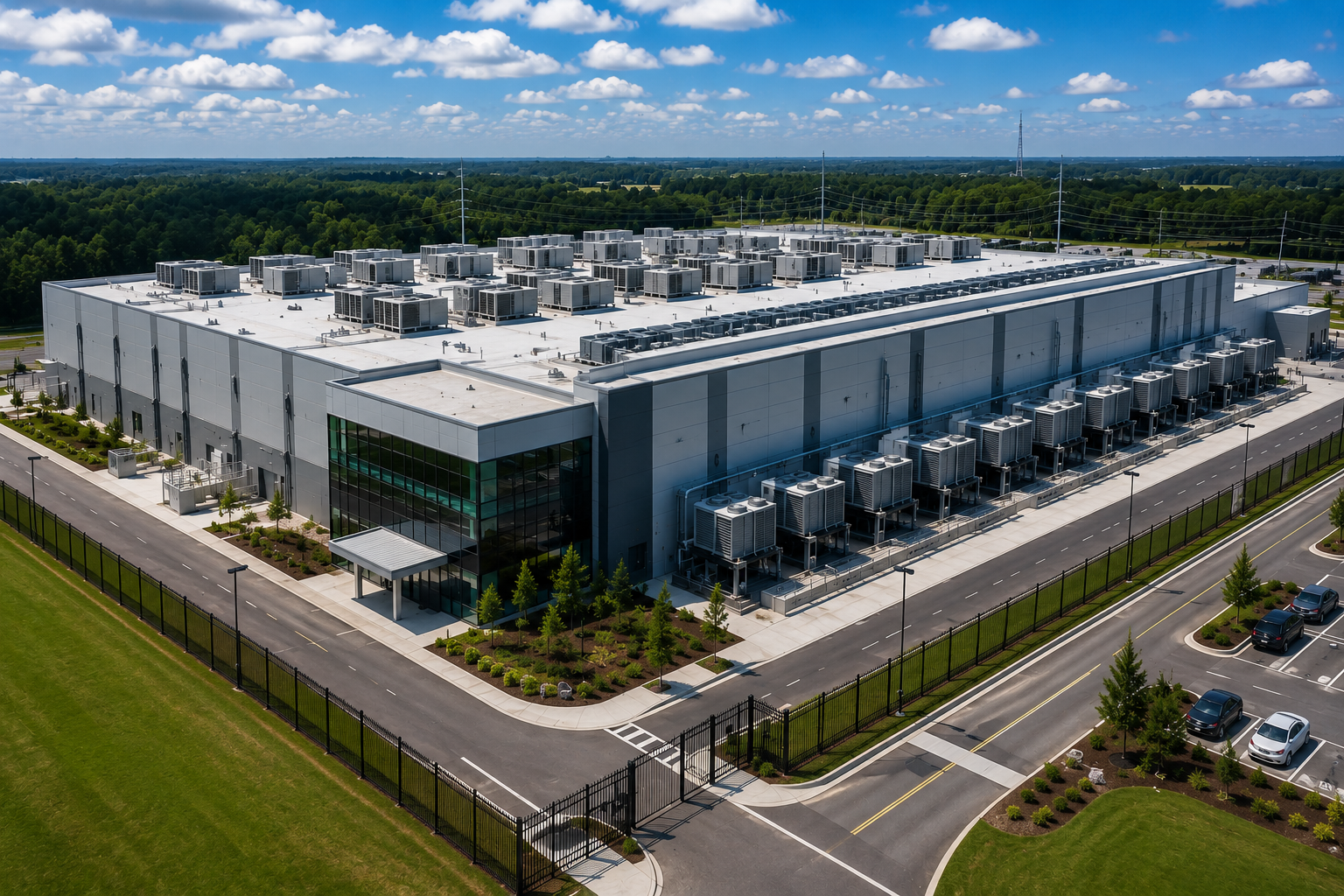
Raleigh -- July 24, 2026: Governor Josh Stein and North Carolina Attorney General Jeff Jackson are calling on Duke Energy to turn a newly announced federal commitment into an enforceable promise for North Carolina ratepayers, arguing that families and small businesses should not bear the financial burden of powering the state's rapidly growing data center industry.
The call comes after Duke Energy signed the federal Ratepayer Protection Pledge, a voluntary agreement designed to ensure that large electricity users—including data centers—pay the full cost of the power generation and infrastructure required to serve their facilities.
State leaders welcomed Duke's participation in the initiative but emphasized that voluntary commitments alone are not enough.
"Signing a pledge is a positive first step," Jackson said in a statement. "But North Carolina customers need protections that are legally binding and enforceable through the North Carolina Utilities Commission."
Stein echoed that message, urging regulators and Duke Energy to establish a formal large-load tariff that would require data centers to pay the full cost of the electricity, transmission upgrades, and other infrastructure necessary to support their operations.
North Carolina's Growing Data Center Demand
North Carolina has become an increasingly attractive destination for large-scale data centers operated by technology companies including Amazon, Google, Meta, OpenAI, and xAI. Those facilities require enormous amounts of electricity, creating significant demand for additional generating capacity and grid expansion.
State officials say the central issue is ensuring that the costs associated with serving those facilities are paid by the companies creating the demand—not by residential customers through higher monthly electric bills.
Under the federal pledge, utilities and large energy users agree to pursue separate rate structures for data centers and similar high-demand customers. Those agreements are intended to require the companies to finance new power plants, transmission lines, substations, and other grid improvements needed to support their operations.
The pledge also encourages companies to develop or procure their own sources of electricity whenever possible rather than relying solely on the public electric grid.
Making the Pledge Enforceable
Jackson and Stein are urging Duke Energy to file those commitments with the North Carolina Utilities Commission so they become enforceable under state regulation.
Specifically, state leaders are seeking:
A separate rate class for data centers and other large-load customers.
Legally binding tariffs requiring those customers to pay the full cost of new generation and infrastructure.
A transparent "bring your own power" program allowing large energy users to secure their own electricity supplies.
More realistic projections of future data center growth to avoid building costly infrastructure that may never be needed.
Jackson's office argues that overestimating future demand could result in ratepayers financing unnecessary power plants and transmission projects.
Ongoing Utility Rate Cases
The announcement comes as Duke Energy continues to pursue rate increases before the North Carolina Utilities Commission.
Earlier this week, Duke Energy Carolinas, the Commission's Public Staff, and several parties agreed to a settlement that would begin a fast-track process for developing large-load tariffs governing data centers and other major electricity users.
Jackson's office plans to participate in that proceeding and advocate for rules requiring large customers to cover the costs associated with their energy demands.
The Attorney General also declined to support Duke Energy Carolinas' recent settlement because it would still increase residential electric rates by approximately 9.5 percent.
According to Jackson's office, Duke initially sought an 18 percent residential rate increase before reducing its request to 11.6 percent following objections from the Attorney General and other parties.
In a separate Duke Energy Progress rate case, Jackson has challenged the utility's proposed 15 percent increase, arguing it would impose nearly $960 million in unnecessary costs on customers over the next two years.
Energy Task Force Recommendations
The issue has also become a priority for the Governor's Energy Policy Task Force, a bipartisan group of approximately 30 energy experts and policymakers.
Earlier this year, the task force recommended developing large-load tariffs, "bring your own capacity" programs, and flexible load-management strategies to protect residential customers while accommodating North Carolina's growing demand for electricity.
That demand is being driven not only by data centers but also by advanced manufacturing projects and continued population growth across the state.
The task force is expected to issue its next report in February 2027.
While Duke Energy's participation in the federal Ratepayer Protection Pledge signals support for shifting infrastructure costs away from households, Stein and Jackson say the real test will come when those principles are incorporated into enforceable North Carolina regulations.