

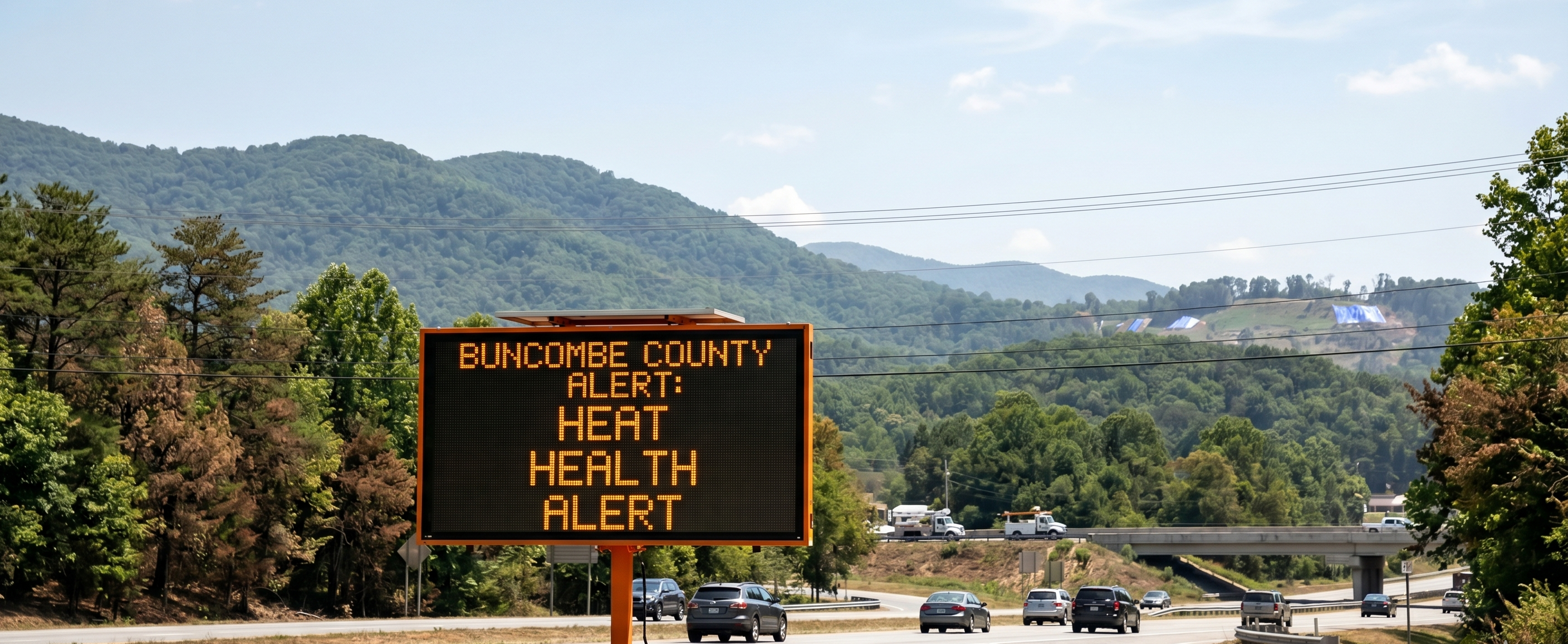
Buncombe County residents face a Heat Health Alert today, Sunday, June 7, 2026, adding a critical public health concern to an already extensive weather-emergency response across Western North Carolina. This dual challenge impacts vulnerable populations directly and compounds widespread disruptions to daily life, infrastructure, and local commerce throughout the Greater Asheville Area, making it imperative for residents to remain vigilant and follow official guidance.
The "Why" Behind the Emergency Response
The intersection of extreme summer temperatures and ongoing regional recovery presents a distinct challenge for local emergency operations:
Long-Term Recovery Strain: This Heat Health Alert hits a region that is still actively managing extensive, long-term infrastructure restoration, watershed stabilization, and community-wide recovery efforts following Tropical Storm Helene.
Compounded Vulnerability: Ongoing localized utility vulnerabilities, disrupted natural shade, and compromised housing infrastructure mean that a standard summer heat spike carries a much higher public health risk, particularly for those without consistent access to climate-controlled environments.
Active County Measures: Local emergency management and specialized county programs, including the Buncombe County Community Paramedics, are actively coordinating to monitor high-risk areas, check on vulnerable residents, and mitigate heat-related illnesses.
Core Heat Safety Reminders
With high temperatures persisting, health officials urge residents to take standard preventative measures:
Stay Hydrated: Drink plenty of water throughout the day, even if you do not feel thirsty, and avoid sugary or caffeinated beverages.
Know the Signs: Watch for symptoms of heat exhaustion (heavy sweating, dizziness, nausea, and weakness). If symptoms escalate to confusion or fainting, seek emergency medical care immediately.
Check on Neighbors: Take a moment to check in on elderly neighbors, those living alone, and individuals who may not have functional air conditioning.