

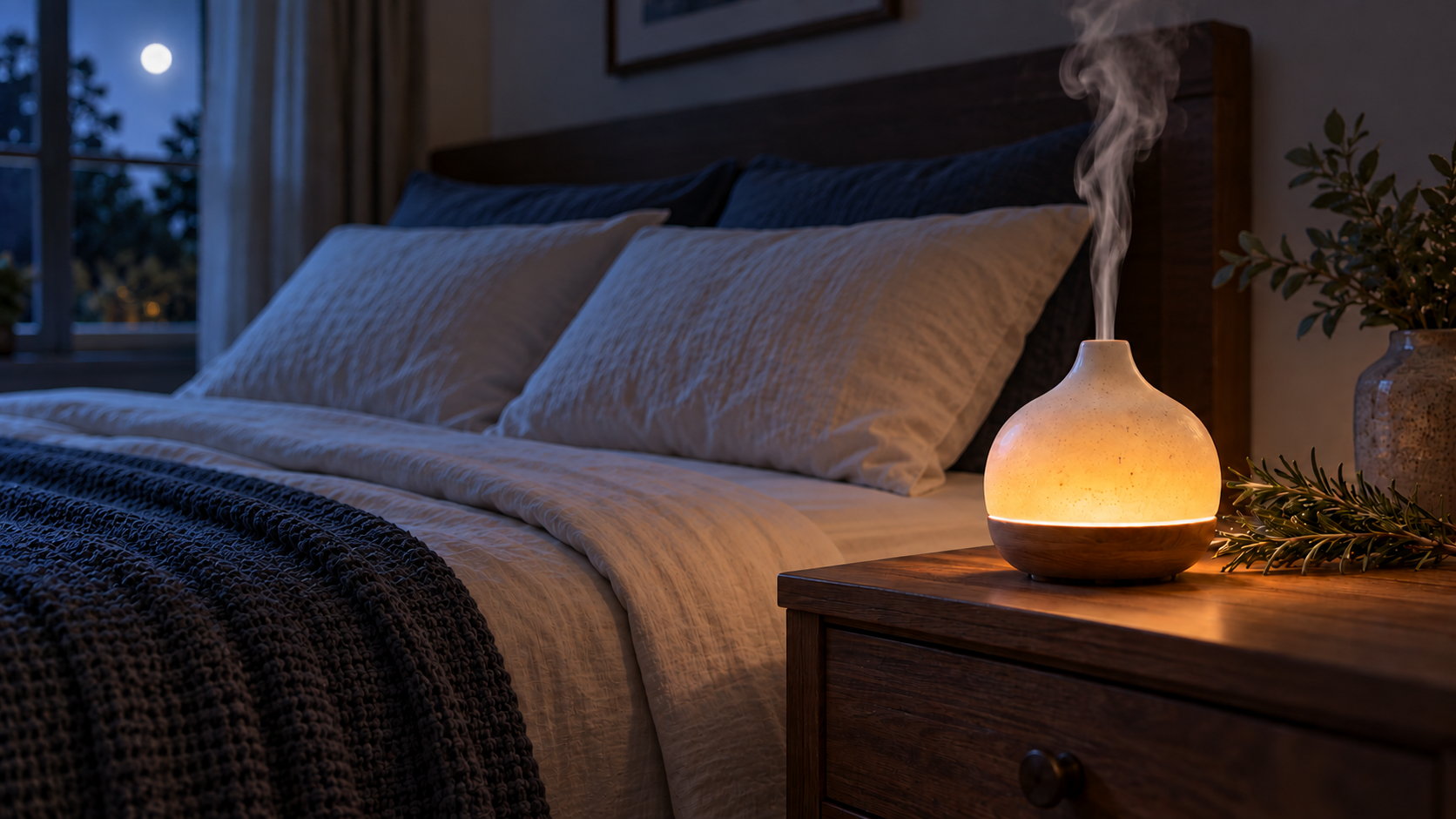
WNC Lifestyle -- September 7, 2026: Getting a full, restorative night’s sleep often becomes elusive as we grow older, and minor slips in recall can start feeling a bit too frequent. Yet groundbreaking research from neuroscientists at the University of California, Irvine (UCI) suggests that the path to deeper rest and improved cognitive function may begin on your nightstand—without a prescription.
Published in Frontiers in Neuroscience, the landmark study evaluated healthy older adults aged 60 to 85 across a six-month clinical period. Participants were provided with an automated essential oil diffuser scheduled to run for just two hours each night while they slept. The intervention rotated through seven natural scents across the week, including rosemary, lavender, eucalyptus, peppermint, and lemon.
Measurable Cognitive Gains: At the conclusion of the six months, participants exposed to the enriched nighttime scents demonstrated a 226% improvement on standard word-recall memory evaluations compared to the control group.
Physical Brain Structural Support: Follow-up brain imaging (fMRI) documented noticeable structural integrity improvements along the uncinate fasciculus—a critical memory highway in the brain that traditionally deteriorates with age.
The Olfactory-Brain Link: The olfactory system represents the only sensory sense that connects directly to the limbic system, the brain's emotional and memory hub. While sleeping, the mind absorbs gentle aromatic stimuli, effectively giving cognitive pathways passive, restorative training.
The Power of Rosemary: Rosemary (Salvia rosmarinus) has carried folklore status as the herb of remembrance for centuries, but modern science confirms its biochemical value. Its natural compounds, such as 1,8-cineole, interact with calming neurotransmitters to lower nighttime anxiety and stabilize heart rate patterns.
Reported Sleep Quality: In addition to memory improvements, trial participants reported waking up substantially less often during the night and experiencing longer, more uninterrupted slow-wave rest.
For Western North Carolina seniors seeking practical, non-invasive wellness habits, implementing gentle aromatherapy is straightforward. Health experts advise running an ultrasonic diffuser for 60 to 120 minutes around bedtime with pure, natural essential oils, or keeping a small sprig of fresh garden rosemary by the bedside.
Join the Conversation:
Have you incorporated an essential oil diffuser into your evening routine?
Would you consider adding natural rosemary to your nightstand to support rest and memory?
What daily wellness habits have made the biggest difference in your sleep quality?
If you try nighttime scent diffusion, please share your thoughts and experiences with the WNC Times community in the comments below.